Summer Explorations 2026
Join us for an experience of a lifetime! Summer Explorations provides exciting opportunities and adventures for 3rd grade through 8th grade students and rising junior and senior high school students.
Whether it is exploring wetlands, investigating solar power, creating environmental art, gardening with space seeds, going on a bug safari, chasing aquatic life, or observing our feathered friends, there is something for every student's interest! We also have a special Genomes and Next-Gen Sequencing program for high school juniors and seniors.
1-Day Workshops
- Grades 3-5: June 10, June 17, June 23, June 24, June 30, July 15, July 23
- Grades 6-8: June 18, June 25, July 9
- Grades 9-12: July 14
- Time: 9:00 a.m.-5:00 p.m.
Lunch, snacks, and materials provided. - Cost: $50
5-Day Workshop
- Rising Junior and Senior High School Students: July 27-31 (Monday-Friday Day Camp)
- Time: 8:30 a.m.-4:30 p.m. Daily
Bring your own lunch - snacks and materials provided. - Free! Our 5-Day Workshop is being provided free of charge to all attendees. A code will provided to everyone who applies waiving the fee.
Workshops by Grade
Environmental Art Summer Camp
June 10, 2026 (9am-4pm)
Michaelyn Dorin
Explore creativity while connecting with nature at our Environmental Art Summer Camp! Designed for students in grades 3–5, this hands-on camp blends art, science, and outdoor discovery into one unforgettable experience.
Campers will create beautiful artwork using natural and recycled materials, learn about ecosystems and conservation, and discover how nature can inspire creativity. Through engaging projects and outdoor exploration, students will develop both artistic skills and a deeper appreciation for the environment.
What Campers Will Do:
- Create nature sculptures using leaves, stones, sticks, and flowers
- Paint and draw outdoor landscapes
- Design recycled art projects from everyday materials
- Learn about local plants, animals, and ecosystems
- Explore ways to protect and care for our planet
Through guided outdoor exploration, collaborative projects, and creative play, campers will build confidence, creativity, and environmental awareness in a fun and supportive setting.
Perfect for curious, creative kids who love art, nature, and getting a little messy!
Feathered Friends: The Beauty of Birds
June 17, 2026 (9am-4pm)
Hannah Addair
Join us for a feather-ific day of hands-on learning as we flap into the avian universe. That’s right; this camp is all about BIRDS!
Have you ever wondered what birds do all day? Curious to know why they sing so loudly in the early morning in spring? Where do they go at night? Do birds stay in the same place all year? And most importantly… do owls poop? If you have ever asked yourself any of these questions, then this is the camp for you!
Students will get the chance to learn both in the Fred Stanback, Jr. Ecological Preserve as well as in the classroom throughout the day. Whether you’re a bird nerd or not, we invite you to join us and learn about the wonders of our feathered friends.
Water Detectives!
June 23, 2026 (9am-4pm)
Lisa Pope
Students will learn the five essential canoe strokes as they paddle across Lake Baranski and Grants Creek within the beautiful Stanback Ecological Preserve at Catawba College.
Working as a team, students will navigate calm waters to carefully capture
and identify fascinating aquatic creatures that are rarely seen up close. These tiny aquatic superheroes act as a natural “check engine light” for water health.
Students will become real “Water Detectives” as they capture, identify, and photograph these unique macroinvertebrates while learning how scientists monitor water quality.
Join us for an unforgettable outdoor adventure filled with paddling skills, scientific discovery, and environmental stewardship!
Waste Wise Wonders: Working for a Greener World
June 24, 2026 (9am-4pm)
Hannah Addair
Join the Center for the Environment Sustainability Program Director as we come together to learn all about waste. Yes, you read that right – waste! Whether it is landfill waste, recycling, or compost, we all have a lot to learn.
Students in this summer camp session will have the opportunity to tour local waste operations facilities and get a behind-the-scenes look at what actually happens to our waste when we throw things “away.” Come ready to learn and ready to divert – we may even try to break a world record or two!
Bug Safari!
June 30, 2026 (9am-4pm)
Dr. Sue Calcagni
Join the Bug Doctor for an adventure in the Fred Stanback Jr. Ecological Preserve! We’ll find, capture, and identify insects, spiders, and other amazing small creatures while we learn about bug biodiversity, important bug jobs, and how scientists use bugs to do ecosystem health checkups.
This is an adventure you do not want to miss!
Paleo Camp: A Hands-On Prehistoric Adventure!
July 8, 2026 (9am-4pm)
Lisa Pope
Students will explore ancient life by examining real fossil evidence — including fossilized teeth, bones, shells, and preserved tracks. Campers learn how fossils form, how paleontologists identify animal species, and what these discoveries reveal about Earth’s distant past.
Students will excavate fossils and carefully prepare their finds using professional tools like those used by paleontologists in the field. Each student will create an authentic shark tooth necklace to take home — a prehistoric treasure they can proudly wear and share!
The Bee’s Knees: Pollinators in Action
July 15, 2026 (9am-4pm)
Hannah Addair
Get ready for a fun-filled, hands-on adventure into the buzzing world of pollinators! Through exciting stations, engaging games, and real-world science, students will explore the essential role pollinators play in our ecosystems and daily lives.
Participants will rotate through action-packed learning stations, where they will have the opportunity to use real tools, identify how pollen moves from flower to flower, and meet real-life pollinators! Whether you're a budding scientist, a nature lover, or just ready to have some fun, The Bee’s Knees is the perfect way to learn, play, and make a difference for our planet’s most important little helpers!
Wetland Explorers: Fish, Frogs & Fantastic Reptiles
July 23, 2026 (9am-4pm)
Robert Shinn
Get ready to splash into the wonderful world of wetlands! Join us for a hands-on adventure exploring ponds, marshes, and streams within the Fred Stanback Ecological Preserve at Catawba College as We search for fish, frogs, turtles, salamanders, and other amazing wetland wildlife.
Using nets, observation tools, and real field science techniques, we’ll discover how these animals live, what they eat, and why wetlands are some of the most important ecosystems on Earth. Along the way, we’ll learn how scientists study water quality and how reptiles and amphibians help us understand the health of our environment.
Participants will also learn how fisheries biologists monitor fish populations
by observing and participating in the tagging process for largemouth bass. We’ll discuss why tagging is important, how it helps scientists track growth and movement, and how data collected from tagging supports conservation and responsible fisheries management.
Be prepared to get a little muddy, explore up-close, and uncover the hidden creatures that call our wetlands home. This is one adventure you won’t want to miss!
Solar: Charged Up!
June 18, 2026 (9am-4pm)
Noah Upchurch
Get hands on with sunshine! Are you a better generator than the sun? Learn about the abundance of free solar power, test appliances, and learn electricity basics during a hands-on day of power exploration!
Water Detectives II
June 25, 2026 (9am-4pm)
Lisa Pope
Students will learn the five essential canoe strokes as they paddle across Lake Baranski and Grants Creek within the beautiful Stanback Ecological Preserve at Catawba College.
Working as a team, students will navigate calm waters to carefully capture
and identify fascinating aquatic creatures that are rarely seen up close. These small aquatic superheroes act as a natural “check engine light” for water health.
Students will become real “Water Detectives” as they capture, identify, and photograph these unique macroinvertebrates while learning how scientists monitor water quality.
Join us for an unforgettable outdoor adventure filled with paddling skills, scientific discovery, and environmental stewardship!
Wetland Field Scientists: Herps, Fish & Ecosystem Detectives
July 9, 2026 (9am-4pm)
Robert Shinn
Step into the role of a field biologist as we investigate the fascinating ecosystems of local wetlands! During this hands-on camp, students will sample aquatic habitats, identify fish, reptiles, and amphibians, and learn how scientists assess ecosystem health.
Participants will use real-world field techniques such as dip netting, habitat assessments, and basic biomonitoring methods to better understand species diversity and water quality. We’ll explore food webs, predator-prey relationships, and the important ecological roles that amphibians and reptiles play in wetland systems.
Students will also examine how fisheries professionals tag and monitor largemouth bass to track growth rates, movement patterns, and overall population health. We will discuss how tagging data informs management decisions and helps maintain sustainable fisheries.
If you enjoy working outdoors, asking scientific questions, and getting your hands wet in the name of discovery, this camp is for you!
Explore the Science of Microplastics This Summer!
July 14, 2026 (9am-4pm)
Dr. Luis Fernández-Torres, Department of Chemistry, Catawba College
Lisa Pope, Catawba College Center for the Environment
Curious about the hidden impact of microplastics in our environment?
This STEM summer program will focus on environmental field adventures, hands-on laboratory experiences, and cutting-edge research techniques.
Participants will:
- Learn how to sample microplastics from the environment.
- Learn how to use a Scanning Electron Microscope (SEM) to identify and quantify microplastics in the Catawba College chemistry lab.
- Discover innovative methods used to track and mitigate microplastics in the environment.
This unique experience is perfect for high school students interested in environmental science, chemistry, and sustainability.
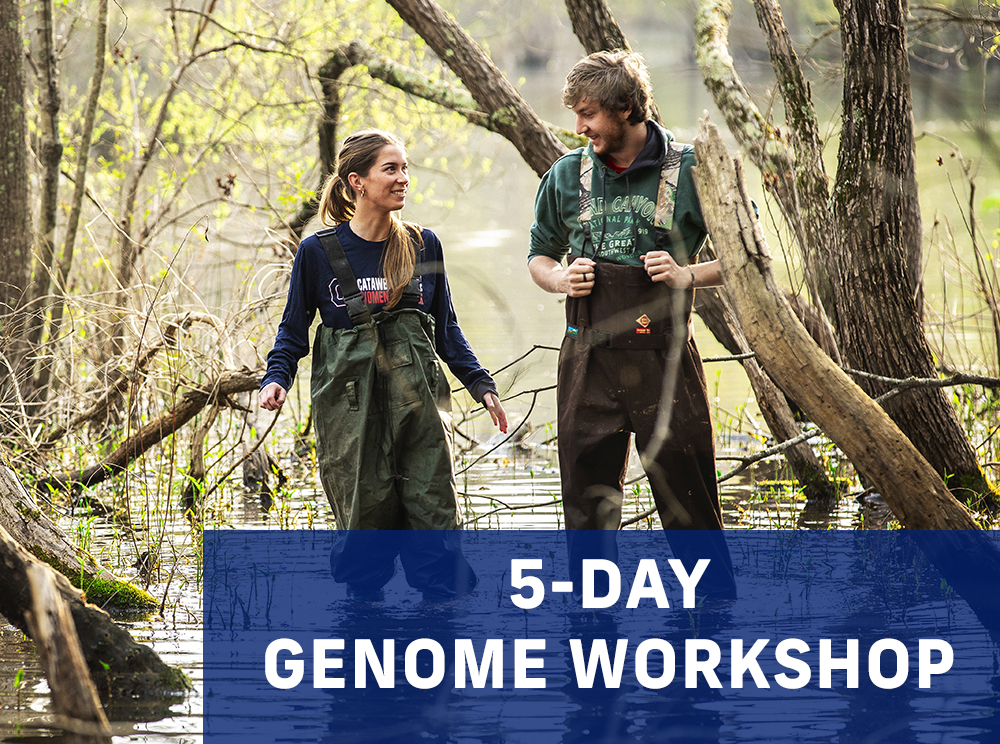
5-Day Workshop —
Genomes in the Wild: Exploring the Environment with Next-Gen Sequencing
July 27-31, 2026
Monday-Friday, 8:30am-4:30pm
Dr. Francisco Camacho, Pabel Delgado, and Dr. Peter Schafran
Offered by Graham Genomics Laboratory, Ketner School of Business, and the Center for the Environment.
The natural environment is full of nature’s invisible blueprints, genomes. The technology of Next-Generation Sequencing (NGS) provides the ability to explore these genomes. This course will collect environmental DNA, use NGS to examine the metagenome, and apply bioinformatics to better understand the environment. Hands on wet laboratories will integrated with modules on environmental entrepreneurship and sustainable business development.
- No cost to attendees
- Bring your own lunch
- Snacks provided
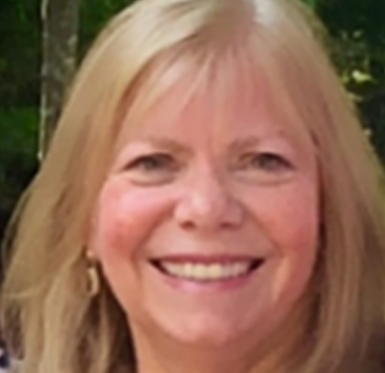
 |
Michaelyn Dorin |
 |
Hannah Addair |
 |
Lisa Pope |
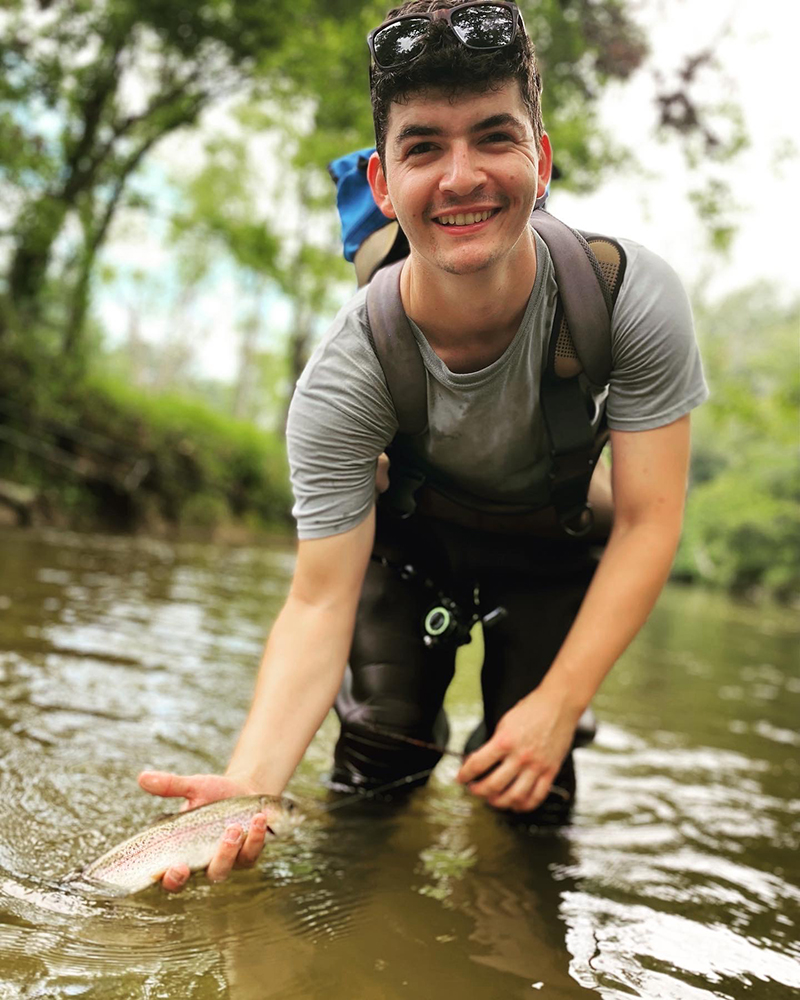 |
Robert F. Shinn Robert serves as Department Coordinator for the Environment & Sustainability program and as a research assistant supporting wildlife field projects. His work focuses on applied conservation research, including wetland ecology, fisheries monitoring, and feral swine Bio management within the Yadkin and Cape Fear River basins. Robert has extensive experience conducting field sampling, wildlife monitoring, and environmental education programming for students of all ages. He is passionate about hands-on science, outdoor learning, and connecting young explorers to real-world conservation work. |
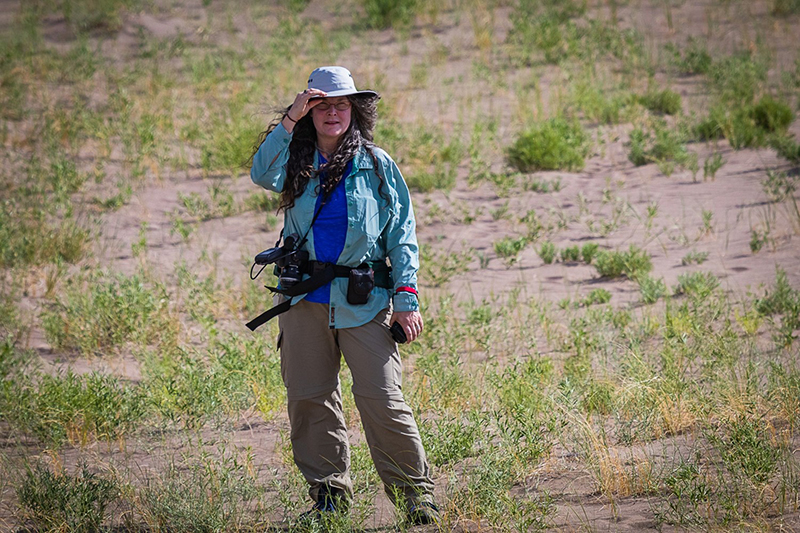 |
Dr. Sue Calcagni Dr. Calcagni is an environmental toxicologist, invertebrate ecologist, and physiologist. She received her Ph.D. from the Nicholas School of the Environment at Duke University, a Master of Science from College of the Environment at Western Washington University, and a Bachelor of Science from Baylor University. Dr. Calcagni’s work centers on teaching and mentoring undergraduates in science, technology, engineering, and math (STEM) disciplines to help build the next generation of toxicologists, invertebrate biologists, environmental professionals, and overall data nerds! Dr. Calcagni teaches a wide variety of science courses ranging from first-year science courses in biology and environmental sciences to advanced topics courses in those subjects at Catawba College while also mentoring student research. |
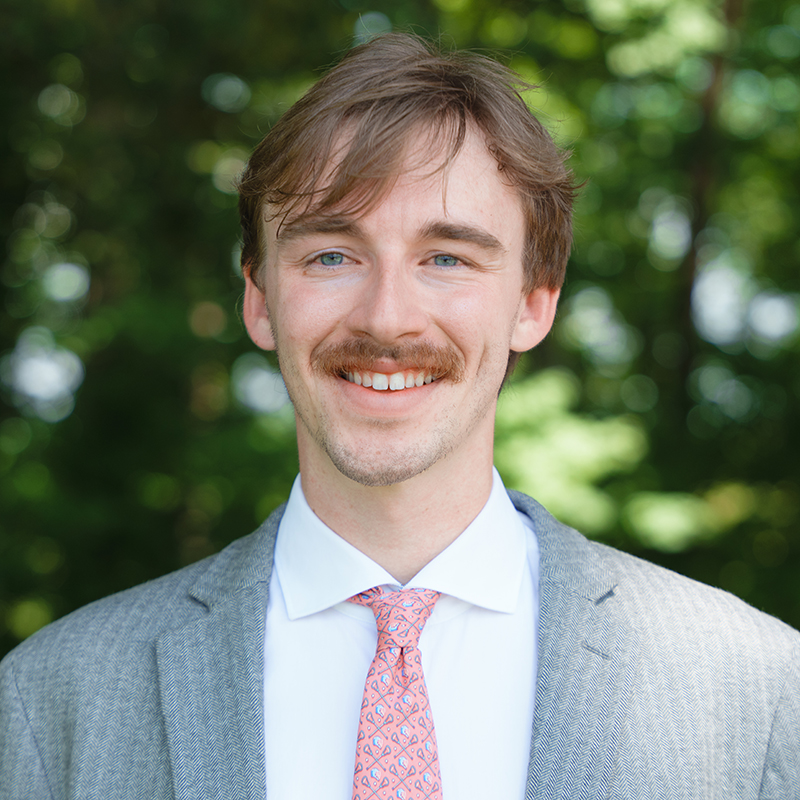 |
Noah Upchurch Noah has worked with the Center for the Environment team since 2022. He leads sustainability reporting for the College's AASHE STARS report. He is an advisor for the Environmental Stewards program and supports the implementation of campus sustainability projects. |
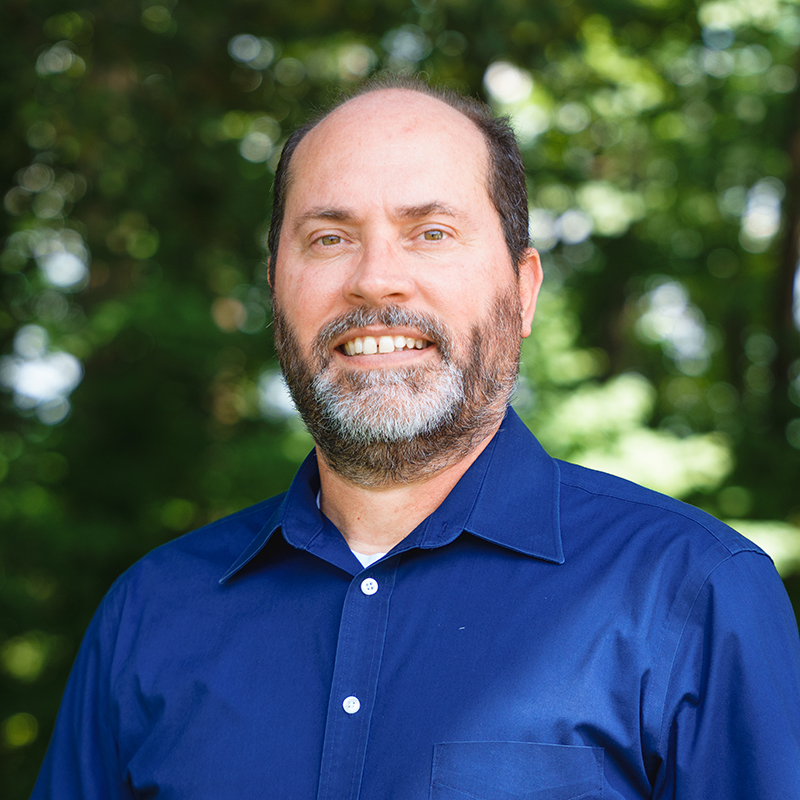 |
Dr. Fernández-Torres is an assistant professor of chemistry and joined Catawba in 2024. He completed his Ph.D. in Chemistry at the University of Houston, Texas, with a specialization in surface science. At Catawba he teaches general chemistry, physical chemistry, and inorganic chemistry; and is interested in undergraduate research in surface science, nanotechnology, solar energy harvesting, and antioxidants. He is also involved in undergraduate research collaborations with other universities. Outside of research, he is an active member of the American Chemical Society, and enjoys sports, and reading.
|
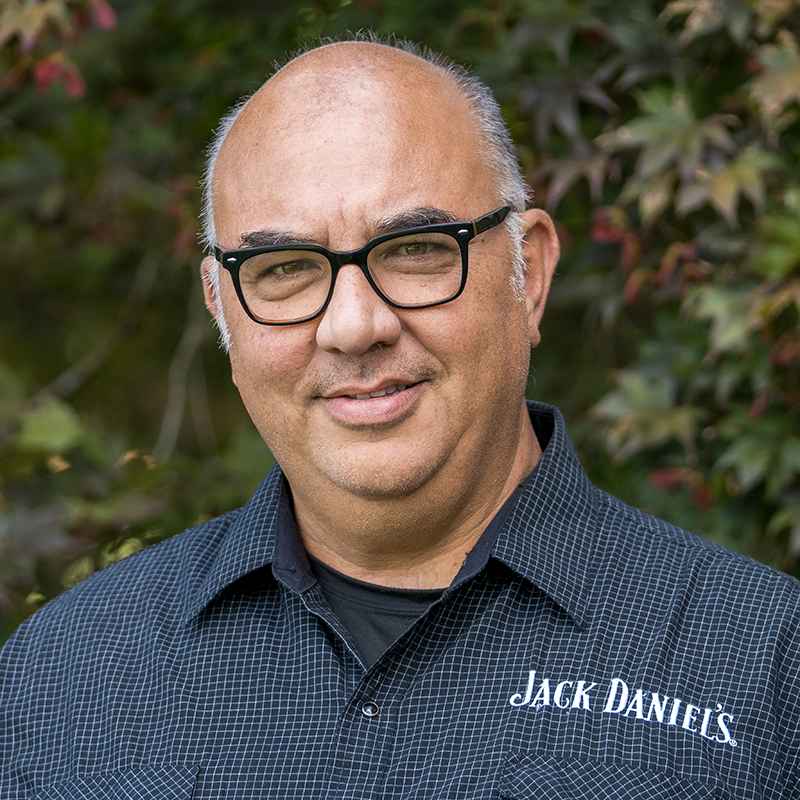 |
Dr. Francisco Camacho
|
 |
Pabel Delgado
|
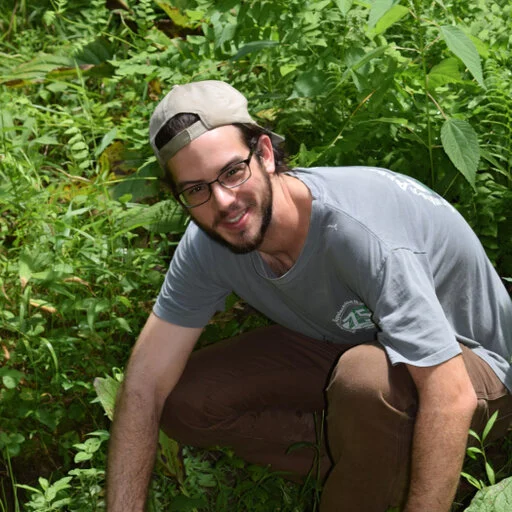 |
Dr. Peter Schafran Dr. Schafran is an NSF Fellow in the Plant Genome Research Program Boyce Thompson Institute Ithaca, New York.
|
Learn More:
Read more, make payments, and more below:
You will be notified by email of your acceptance once your application materials and fee have been received and reviewed by our Acceptance Committee.
Additional health and permission forms will be emailed to you and need to be returned as soon as possible.
- 1-Day Workshops: $50 (3rd-8th Graders)
- 5-Day Workshop: $450 (Rising Juniors/Seniors)
Program fee covers lunch and supplies.
Questions?
If you have any questions or concerns, please don’t hesitate to contact us at envsummit@catawba.edu or 704-637-4791.
