Rooftop and balcony plug-in solar panels are small, light, and can plug into wall outlets to provide electricity directly to one’s residence. These panels have the potential to save hundreds of dollars in residential utility costs each year. They can be used for many different types of appliances, are light and easy to carry, and come at a reasonable cost, making them a smart investment for not just homeowners, but renters as well. They are also equipped with safety features to ensure power is cut off in the event of a power outage or surge to protect linemen.
Catawba students have used this equipment for different appliances and displays around campus – for example, our Solar Raycing Team has used them to power cooking equipment, fans, and heaters during their events!
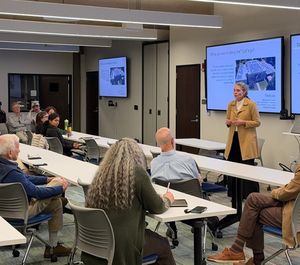
Del Chiaro discussed the ways in which plug-in solar panels can foster energy equity and affordability for renters, low-income households, and other groups that may not always have access to this type of technology. She provided stories of real communities who have benefited from plug-in solar panels while opening the possibility for more communities to have access to this technology.
We were excited to see our guests asking questions and embracing new ideas during the talk. We spoke to a few guests after the event and reflected on what they took home.
Megan Smith (Class of 2021) said, “I learned a lot about plug-in solar during this talk. The presentation helped me understand the autonomy that may come with a more localized source of energy. While I understand the initial uncertainties regarding safety, the talk helped me to understand the extensive safeguards in place to protect workers.”
Kaden Reynolds (Class of 2027) reflected, “I’m very excited about the possibilities of balcony solar systems! This is a great way to offset electricity costs with a sustainable investment!”
Plug-in solar technologies aren’t just localized to the United States – they have the potential to bring energy equity to communities around the world.
Iri Rasolondalao (Class of 2030) said, “I especially liked the talk because it opened my eyes to the possibility of applying the same systems in Madagascar, where electricity is still a big problem.”
The conversation didn’t end after the event. Several guests stayed long after the presentation ended and talked with Del Chiaro and Cook about opportunities to bring rooftop and balcony solar to communities in North Carolina. It is currently not legal to use rooftop and balcony plug-in solar panels with wall outlets in homes in North Carolina. At this time, panels can be used with appliances that store energy using batteries. However, neighboring states, such as Virginia, have recently legalized these panels for use with wall outlets in homes. The conversations we had at this event provided hope that North Carolina may follow suit.
At the Center for the Environment, our goals are to show what we can accomplish and to invite local communities to take part in our journey towards a regenerative campus. We encourage those who attend our events to embrace curiosity about new topics and challenge their perspectives. Our evening with Del Chiaro and Cook reflected these goals by bringing people together to discuss the unique advantages of plug-in solar and how these innovations can foster resilient, sustainable communities.
We invite you to follow along to learn more about the work we’re doing to support our communities. Stay in touch with us on social media and continue to visit our website for more news updates! For more information on the status of plug-in solar panels across the United States, please visit the policy tracker (https://pluginsolarusa.com/) to learn more about recent developments!
About the Center for the Environment
The Catawba College Center for the Environment is a center of distinction for environmental stewardship and regenerative sustainability. Since its founding in 1996, the Center has been a living-laboratory for students, faculty, and staff that provides interdisciplinary environmental education and research opportunities. The Center also serves as a research and policy hub for environmental sustainability issues.
